If you strip the logo off your latest vibe-coded app, could you actually tell it apart from the thousands shipped this week?
The speed is real. So is the damage.** Vibe coding for designers** solved the blank-canvas problem—but replaced it with a design ceiling where every dashboard looks like the same purple-accented shadcn template wearing a different logo.
Most teams don’t have an AI problem. They have a specification problem. And until designers take control of structure before syntax, vibe coding keeps producing prototypes that collapse the moment they touch production.
The Evolution of Vibe Coding: From Weekend Hacks to Production Crises
Andrej Karpathy and the Origins of “Forgetting Code Exists”
The term vibe coding came from Andrej Karpathy in early 2025. The idea was simple: stop thinking about syntax and let the model handle implementation.
That worked for prototypes.
It failed the moment teams tried to ship.
The original promise sounded like liberation. Designers and founders could describe software instead of building it. But what actually happened was a shift from writing bugs manually to generating them faster.
The 2026 Software Crisis: Security Flaws and Technical Debt
By late 2025, empirical signals were impossible to ignore:
- 45% of AI-generated code failed basic security tests
- AI pull requests contained 1.7× more major logic errors
- teams felt faster while moving slower
This is the METR paradox in action. Developers believed they were 20% faster. They were actually 19% slower.
The illusion comes from watching code appear instantly. The cost appears later during QA, refactoring, and state debugging.
Most guides tell you vibe coding accelerates delivery. That’s wrong because it accelerates generation, not integration.
And integration is where products live or die.
The “Design Ceiling”: Why Every Vibe-Coded App Looks Exactly the Same
The Tailwind and shadcn Trap (The “Purple Slop” Problem)
Open three AI-generated dashboards side by side. Remove branding. They’re indistinguishable.
That’s the design ceiling.
App generators like Lovable, Bolt.new, v0, and Base44 rely heavily on the same component training priors:
- Tailwind defaults
- shadcn/ui structures
- rounded card layouts
- purple accent tokens
The result is predictable: functional apps that look like hackathon demos instead of enterprise software.
This destroys trust faster than missing features.
One Series B designer put it plainly: nobody pays $500/month for an interface that looks free.
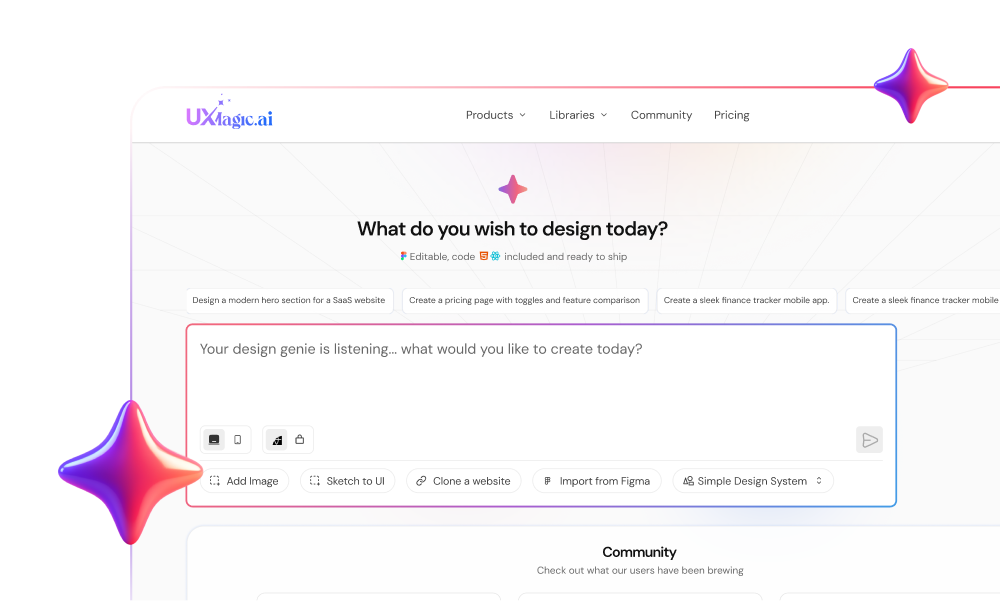
This is exactly where style-locked multi-screen specification matters. Tools that enforce visual structure early prevent teams from inheriting template identity by accident. That’s the core logic behind spec-driven systems like UXMagic’s flow-level style enforcement before code generation happens.
Generative UI vs. Vibe Coding: Who Owns the Architecture?
Generative UI tools explore visuals.
Vibe coding tools generate logic.
Neither owns architecture unless you force them to.
That gap is where most products fail.
Designers who skip visual specification end up cleaning:
- invented typography tokens
- mismatched spacing systems
- broken accessibility contrast
- duplicated component variants
If this sounds familiar, you’re not alone. It’s the same cleanup loop described in How Designers Actually Use AI in Real Projects , AI outputs become first drafts, not deliverables.
The faster AI generates interfaces, the more valuable taste becomes.
Vibe Coding vs. Agentic Engineering: The Paradigm Shift
Why Senior Developers Are Rejecting Unstructured AI Prompts
Pure vibe coding assumes AI can plan architecture.
It can’t.
LLMs execute well inside constraints. They hallucinate outside them.
That’s why professional teams are moving toward agentic engineering:
- explicit visual specifications
- constrained component structures
- TDD-style iteration loops
- structured developer handoff pipelines
This flips the workflow.
Instead of prompting code first, teams define structure first.
The fastest way to code with AI is to stop coding with AI until the interface exists.
If that sounds backwards, it’s because most workflows are backwards.
The Enterprise Cliff: When Fast Prototypes Fail in Production
The enterprise cliff happens when a prototype that “works perfectly” locally collapses under real infrastructure.
Typical failure points:
- authentication integration
- database schema updates
- responsive breakpoints
- session persistence
- accessibility compliance
This is where shadow AI appears.
A founder vibe-codes onboarding over a weekend. It ships. Nobody understands it. Then routing breaks and the entire team freezes.
That’s not velocity. That’s a technical debt factory.
A better approach mirrors the structured logic described in Human-in-the-loop AI design workflows: treat generated output as draft material until validated against specs.
The Spec-Driven Workflow: How Designers Regain Control
The difference between fragile prototypes and production-ready systems is specification order.
Here’s the professional sequence.
Step 1: Visual Specification and Flow Validation
Start with flows. Not prompts.
Define:
- onboarding states
- empty states
- loading states
- error boundaries
- edge-case navigation
Most LLM hallucinations happen because these states never existed in the prompt.
Flow-level validation prevents architectural drift before it starts. This directly addresses the state-disconnect failures common in multi-screen generation pipelines.
It also eliminates prompt fatigue, the endless loop of “move this left” corrections described in Blank Canvas Syndrome.
Step 2: Enforcing Style Consistency Across Multi-Screen Projects
AI builders don’t respect your design system unless you force them to.
That’s why brand tokens must be locked before execution:
- typography scale
- spacing rules
- color hierarchy
- component states
Otherwise the model invents its own.
Spec-driven tools enforce consistency across screens automatically so the output doesn’t drift into template territory. This breaks the purple-slop cycle entirely.
Accessibility belongs here too, not later. The fastest teams embed contrast logic directly into prompts, exactly like the workflow described in Prompting AI for WCAG-aligned interfaces.
Step 3: Executing Agentic Code Generation
Now and only now does code generation start.
Instead of: Build me a dashboard
the instruction becomes: Implement state logic for these validated components
That single shift changes everything.
The AI stops guessing layout and starts routing logic.
Architectural drift drops dramatically because structure already exists.
Step 4: Verification and Iteration
Never refactor hallucinated code directly.
Update the spec.
Regenerate the component.
Re-execute logic.
This preserves maintainability and keeps designers orchestrating systems instead of patching outputs.
If you want practical examples of production-grade prompts that follow this structure, the breakdown inside Real prompts we use for SaaS interfaces shows exactly how teams enforce constraints before generation.
Escaping the Slop: How UXMagic Bridges Design and Production
The AI builder ecosystem splits into two extremes:
Category Strength Limitation App generators Fast logic output Generic UI AI design tools Fast visuals Weak production translation
The missing layer is flow-validated specification.
That’s where UXMagic operates.
Using Flow Mode to Eliminate Structural Chaos
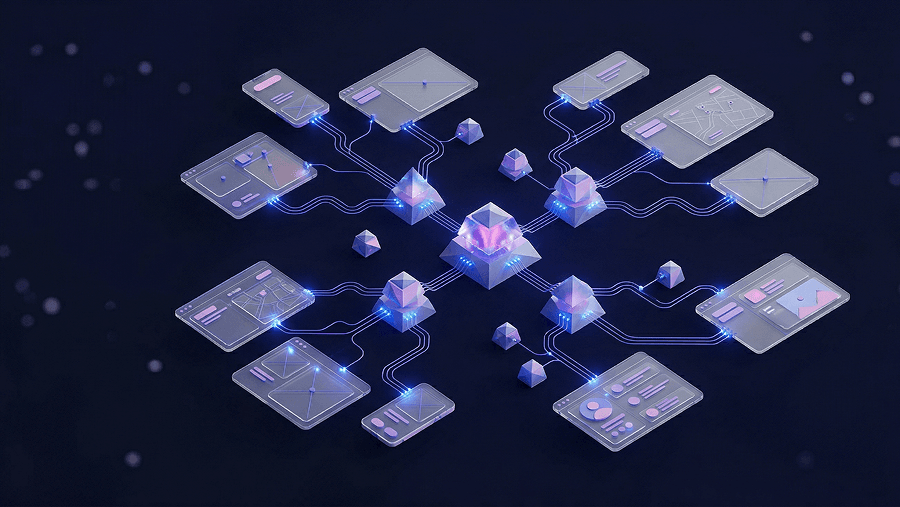
Flow Mode forces teams to map:
- transitions
- states
- edge cases
- empty scenarios
before any React exists.
This acts as architectural QA for generative UI workflows. Instead of fixing hallucinated state management later, designers prevent it earlier.
That single shift eliminates most enterprise-cliff failures.
Generating Production-Ready React Components from Text
Traditional developer handoff relied on static frames.
Modern handoff requires executable structure.
UXMagic converts natural-language flow intent into React/HTML components aligned with visual specs. That keeps designers moving at vibe-coding speed without inheriting vibe-coding fragility.
The result isn’t faster prototyping.
It’s fewer rewrites.
Vibe coding made software faster to generate but harder to ship. Designers who define flows, enforce style systems, and constrain AI before code generation will control product quality in the agentic engineering era. The real advantage isn’t prompting better, it’s specifying earlier. The teams that treat AI output as architecture will ship faster than the teams treating it like autocomplete.
Generate your first production-ready multi-screen flow in minutes with UXMagic.
Stop prompting layouts into existence.