
TL;DR: The right Replit alternative depends on which part of Replit you are replacing. For prompt-to-app building, try Lovable, Bolt.new, Base44 or Emergent. For AI coding on your own machine, Cursor, Windsurf or Claude Code. For a cloud dev environment without an agent, GitHub Codespaces or CodeSandbox. And to design the product before you pay an agent to build it, UXMagic plans whole flows you can hand to any of them.
Replit is hard to compare because it is three products in one. It is a cloud IDE, the thing it was originally known for. It is Replit Agent, which turns a prompt into a running app with a database. And it is a hosting platform that puts that app on a URL. Most people looking for Replit competitors are unhappy with one of those three and fine with the other two.
So the first question is not "what is better than Replit?" but "which job am I trying to do?" We grouped the alternatives below by that job. Find the group that matches, then compare the two or three tools inside it.
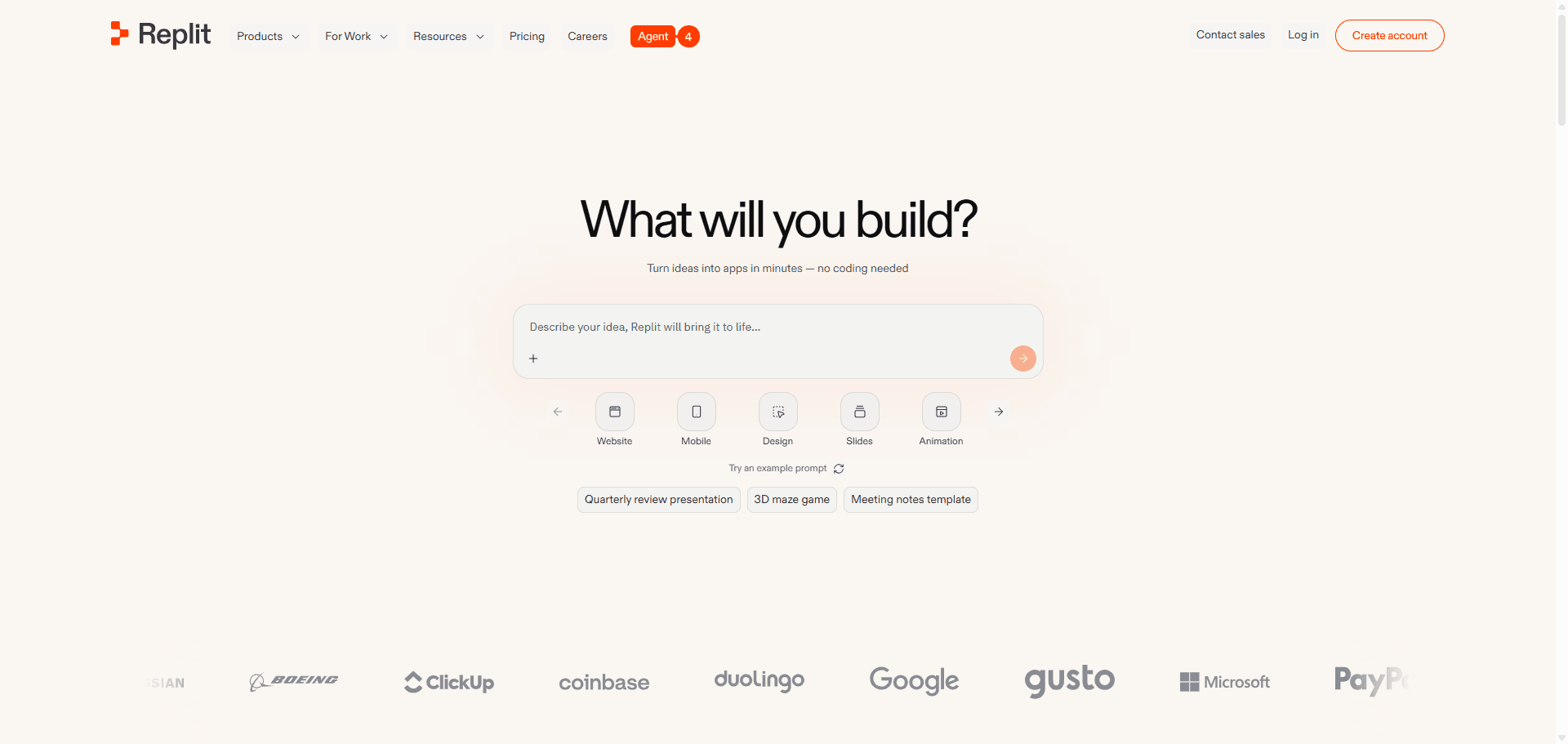
Why people look for Replit alternatives
The reasons we hear most often from founders and product teams:
- The bill is hard to predict. Replit Agent uses effort-based pricing. Per Replit's documentation, each request becomes a checkpoint priced by how much work the agent did, so a complex change costs more than a simple one. That is fair in principle, but it makes budgeting hard when the agent loops on a bug.
- The free tier is a trial, not a home. The Starter plan allows one published app, which carries a "Made with Replit" badge and goes offline after 30 days.
- The UI looks generic. Like most prompt-to-app tools, Replit designs and codes in the same step. Every layout change is a code change, so polishing the look burns agent effort. We wrote about this pattern in why single-screen AI design is a dead end.
- Developers want their own editor. If you already have a repo, tests and a local setup, a browser workspace can feel like a detour.
If you are new to the whole category, what vibe coding actually is is a good primer.
Replit alternatives at a glance
| Job you need done | Best Replit alternatives | What you get | Free tier |
|---|---|---|---|
| Design the product before building | UXMagic | Multi-screen flows, shared theme, Figma and React export, MCP | Yes, 20 credits a day |
| Prompt-to-app building | Lovable, Bolt.new, Base44, Emergent | Running app with backend, auth and hosting | Yes (limited) |
| Frontend UI code | v0 | React, Tailwind and shadcn/ui components | Yes, $5 of credits |
| AI coding on your own machine | Cursor, Windsurf, Claude Code | An agent inside your editor or terminal | Cursor and Windsurf yes; Claude Code needs Pro |
| Cloud dev environments | GitHub Codespaces, CodeSandbox | A hosted workspace, no agent required | Yes (monthly quota) |
| Free and local | VS Code | Open-source editor with extensions | Fully free |
- Design first: work out the product before an agent builds it
A lot of Replit spend goes on work that is really design: moving a sidebar, making the dashboard less cramped, fixing a signup screen that no longer matches the landing page. Each of those is an agent run. The cheaper approach is to settle what the product looks like while changes cost almost nothing, then give the builder a finished target.
UXMagic vs Replit
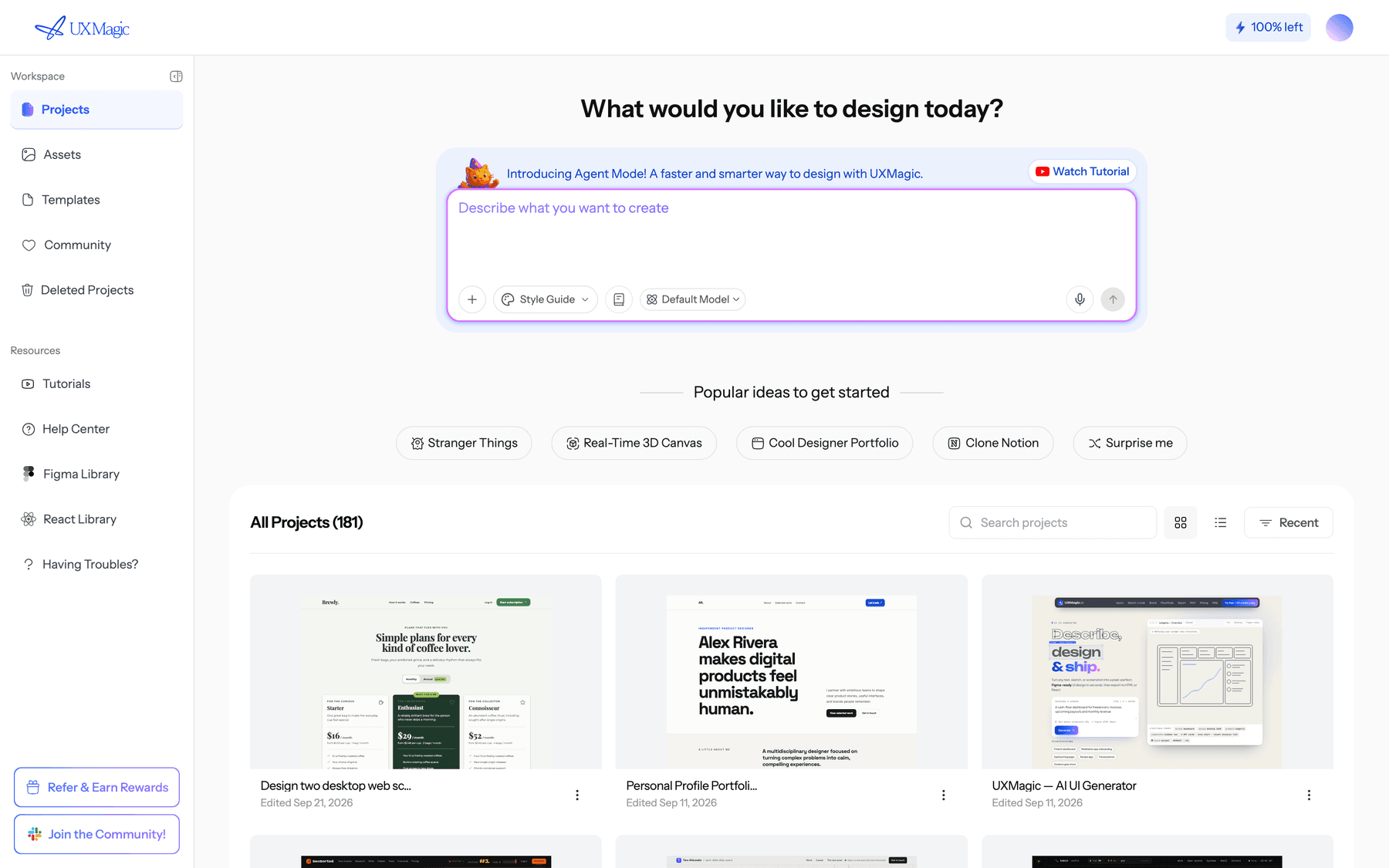
UXMagic is an AI UI/UX design tool, not an IDE or app host. You describe the product, and it proposes a screen plan: a named list of screens, each with a one-line purpose. You edit or approve it, and Flow Mode designs every screen on one canvas with a shared theme and navigation. The flow mode and screen plans guide shows the steps.
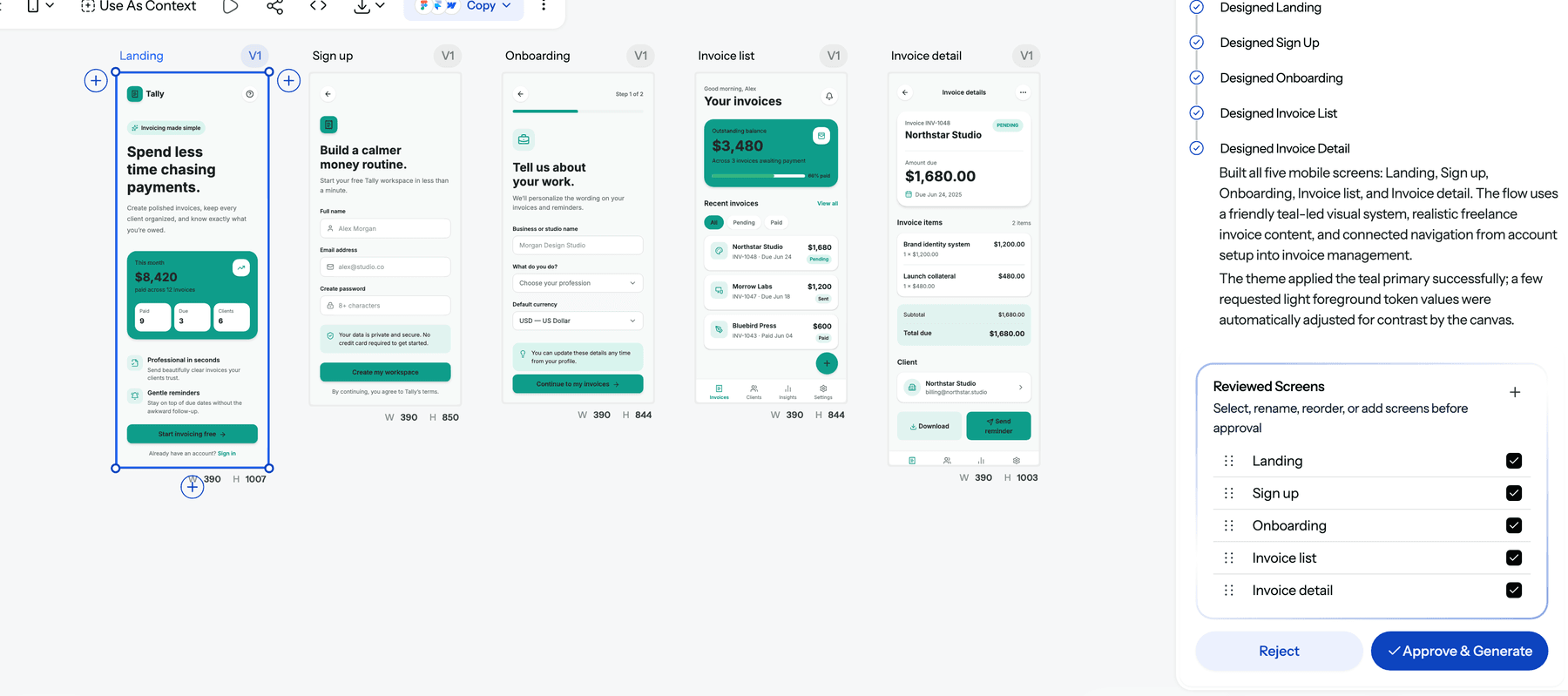
How it fits next to Replit:
- Whole flows, one look. Colours, type, radii and spacing live as design tokens on the project, so a theme change moves every screen together. See themes and style guides.
- More starting points than a prompt. Turn a screenshot into an editable screen with image to UI, start low-fidelity with the AI wireframe generator, clone a live site, or import from Figma.
- Cheap iteration. Per our credits guide, a new screen costs 3 credits and a targeted edit costs 0.2, and theme changes are free.
- Code you can take anywhere. Export code as HTML or React and Tailwind, or push it to a repository with GitHub sync. You can then open that repo in Replit, Cursor or Codespaces.
- A direct line to your coding agent. The UXMagic MCP server lets Cursor, VS Code, Windsurf, Codex, Antigravity or Claude read your real screens, HTML and theme, so the agent implements your design instead of inventing one.
Where it falls short: UXMagic does not run code, host a backend, create databases or handle auth. Exported code is a front end without a data layer. If you need a working app, pair it with one of the builders or editors below.
Best for: founders and PMs planning an MVP, and designers who want the build to match the design. Read our full UXMagic vs Replit comparison, or see the AI MVP builder page for the founder workflow.
Design the app before you pay to build it
Plan every screen, keep one theme across the flow, then export React code or hand it to Cursor or Claude through MCP.
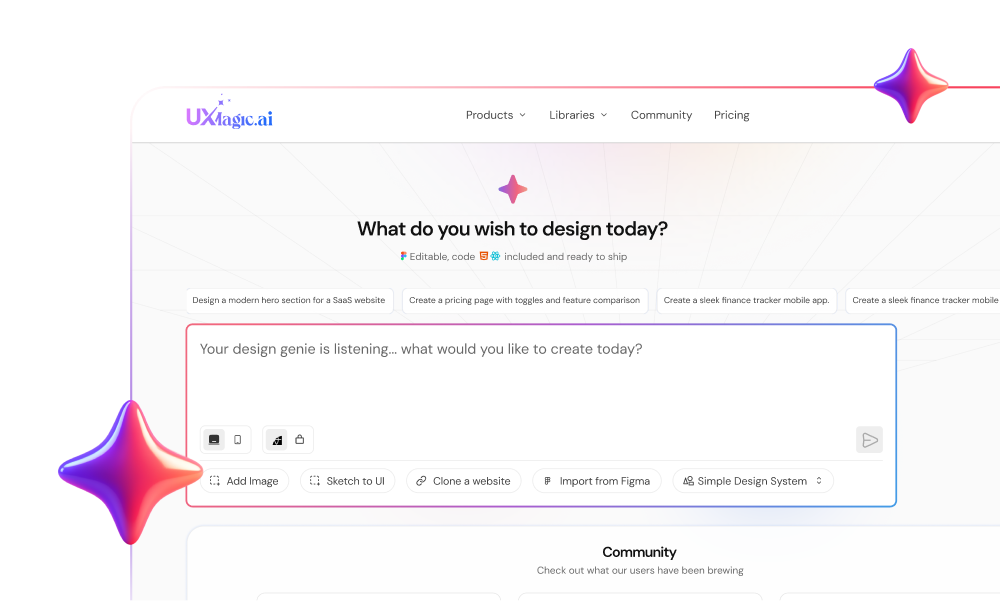
- Prompt-to-app builders: the closest Replit Agent alternatives
These tools do what most people now use Replit for: you describe an app and get something running, with a backend and a URL.
Lovable vs Replit
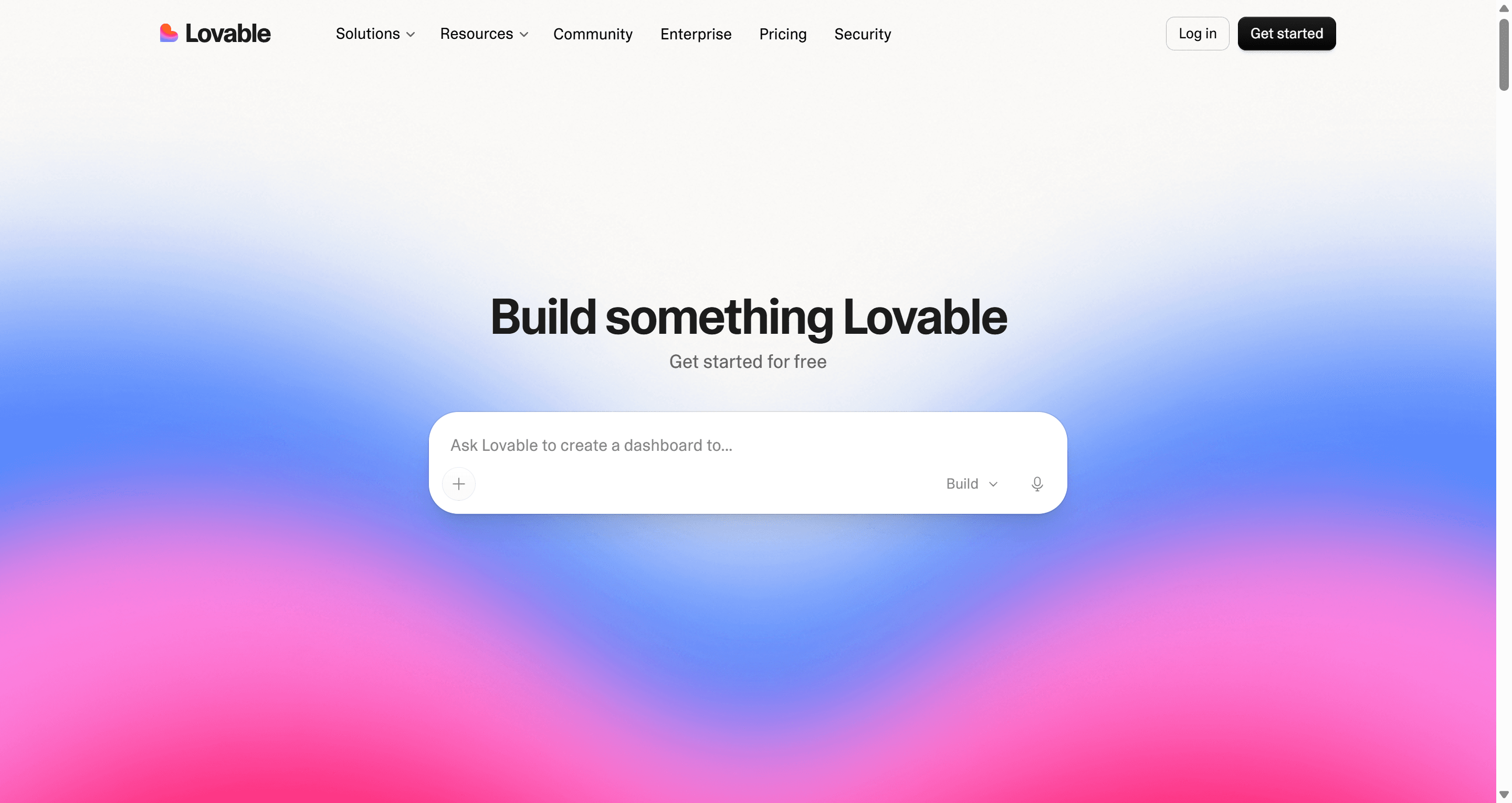
Lovable writes a React front end and connects a database, auth and hosting through Lovable Cloud. It hides more of the environment than Replit does, which suits non-developers and makes the first hour faster. You can still sync code to GitHub when a developer needs it.
Lovable's free plan gives 5 build credits a day (up to 30 a month). Pro starts at $25 a month for 100 credits, about $21 billed annually. Our Lovable pricing guide breaks down how those credits are spent.
- Best for: non-technical founders who want an MVP with login and data and don't care which stack it runs on.
- Falls short: it is opinionated about the React stack, and credit use rises with every layout change.
Read our full Lovable review or the UXMagic vs Lovable comparison. If Lovable is on your shortlist too, our Lovable alternatives guide covers the same ground from the other side.
Bolt.new vs Replit
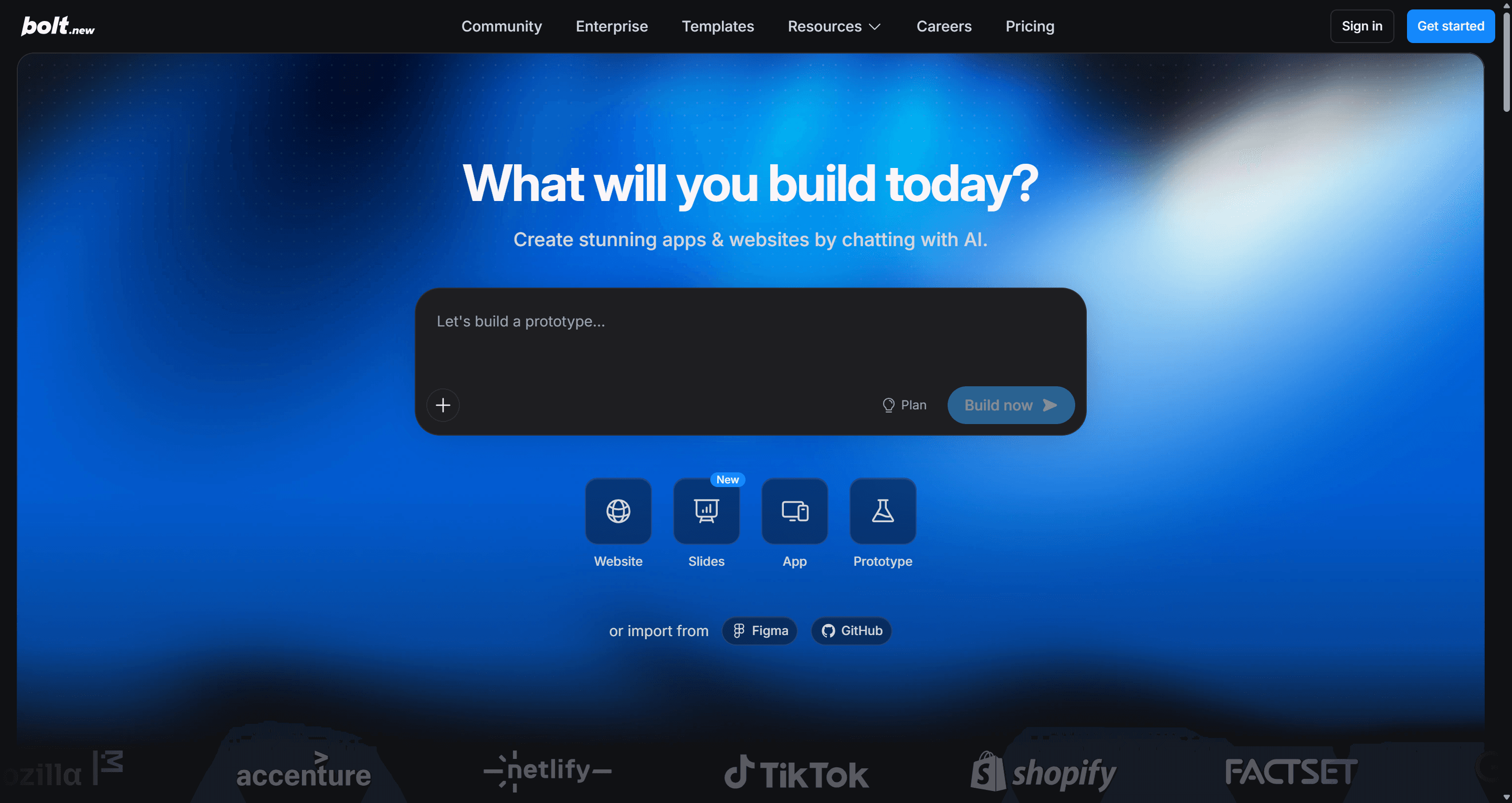
Bolt.new, from StackBlitz, runs a full development environment inside the browser tab. It installs packages, runs a dev server, and lets you open every file. That makes it the most Replit-like of the builders for developers who like to see what is happening.
Per Bolt's pricing page, the free plan includes 300K tokens a day and 1M a month. Pro starts at $25 a month with 10M tokens, and Teams is $30 per member.
- Best for: technical founders who want Replit's transparency with a faster prompt-to-preview loop.
- Falls short: token use grows with project size, so late changes on a large app get expensive. Our Bolt.new pricing breakdown shows how.
Read our Bolt.new review, or see Bolt.new alternatives if Bolt is the tool you are trying to leave.
Base44 vs Replit
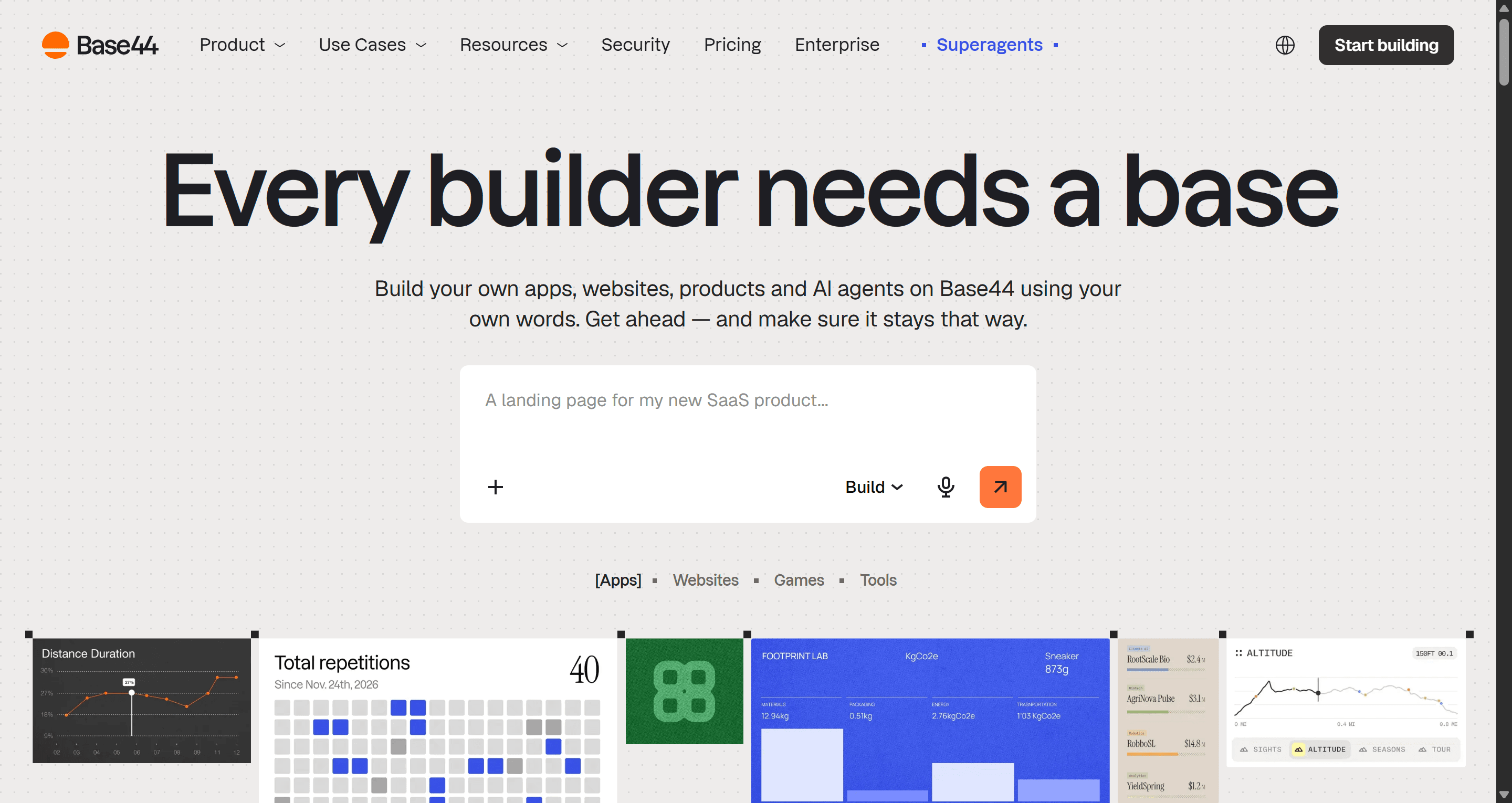
Base44, now owned by Wix, is the most no-code option here. It generates an app with a built-in database, authentication and hosting, and keeps most of the code out of sight. Internal tools, simple SaaS ideas and client portals are where it shines.
Base44's pricing page lists a free plan with 25 message credits a month and up to 5 apps. Paid plans run Starter $16, Builder $40, Pro $80 and Elite $160 a month on annual billing.
- Best for: non-developers who want working data and login without touching code.
- Falls short: you depend more on Base44's platform, and the generated UI is functional rather than distinctive.
Read our Base44 review, compare UXMagic vs Base44, or browse Base44 alternatives.
Emergent vs Replit
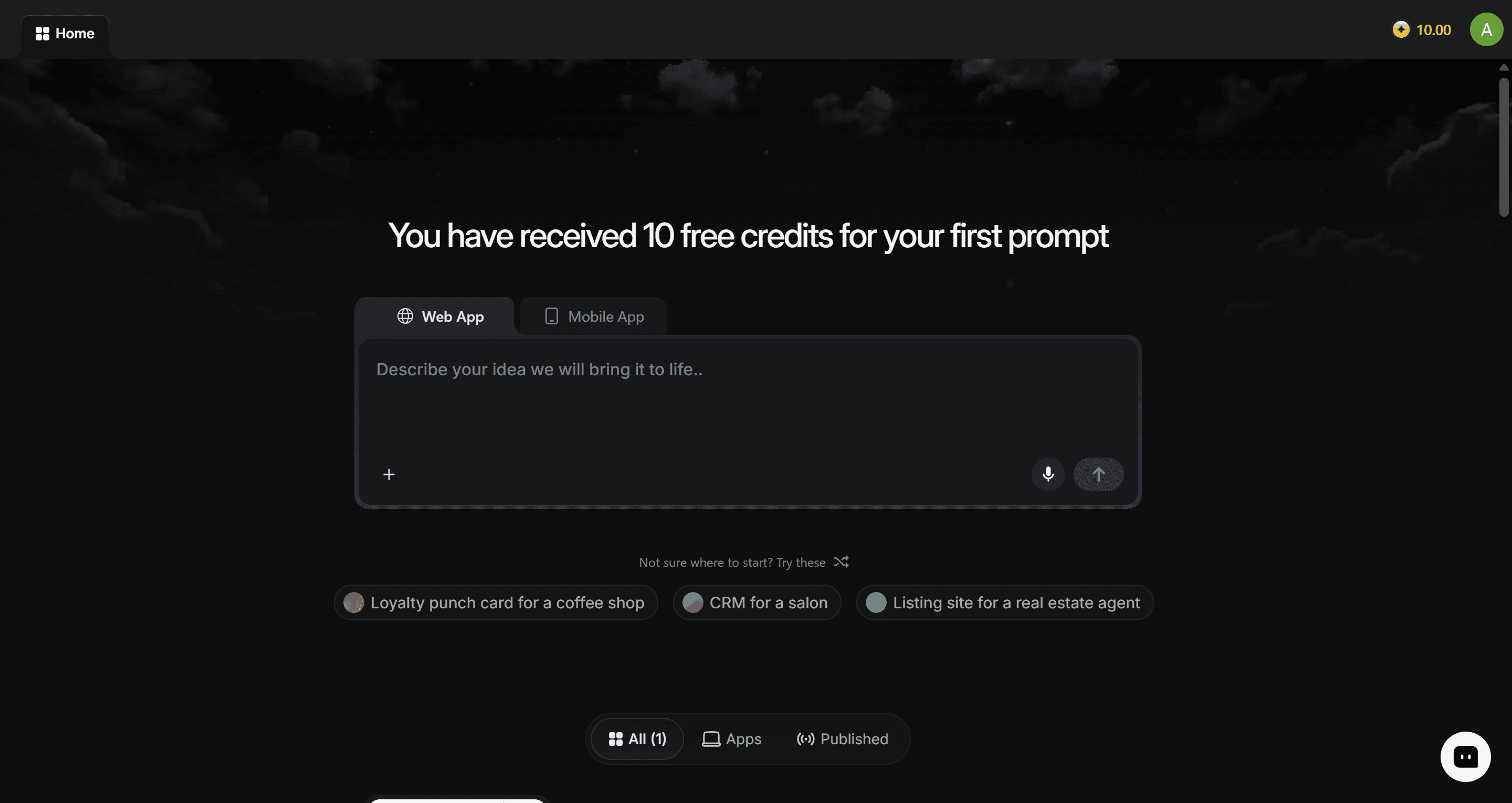
Emergent uses several coordinated agents to plan, write, test and deploy web and mobile apps. It pushes further toward "the AI does the engineering" than Replit Agent, with larger context and custom agents on higher tiers.
Emergent's pricing page lists 10 free credits a month, Standard at $20 a month ($17 annually) for 100 credits, and Pro at $200 a month for 750 credits.
- Best for: founders building more complex full-stack or mobile apps who want testing handled by the agent.
- Falls short: the free allowance is small and the step from Standard to Pro is large.
Read our Emergent AI review or the UXMagic vs Emergent comparison. Building a native mobile app specifically? Rork is made for that.
For a direct comparison of this group, see our vibe coding tools comparison, which puts Bolt, Lovable and Base44 side by side.
- Frontend UI code: when you only need the interface
v0 vs Replit
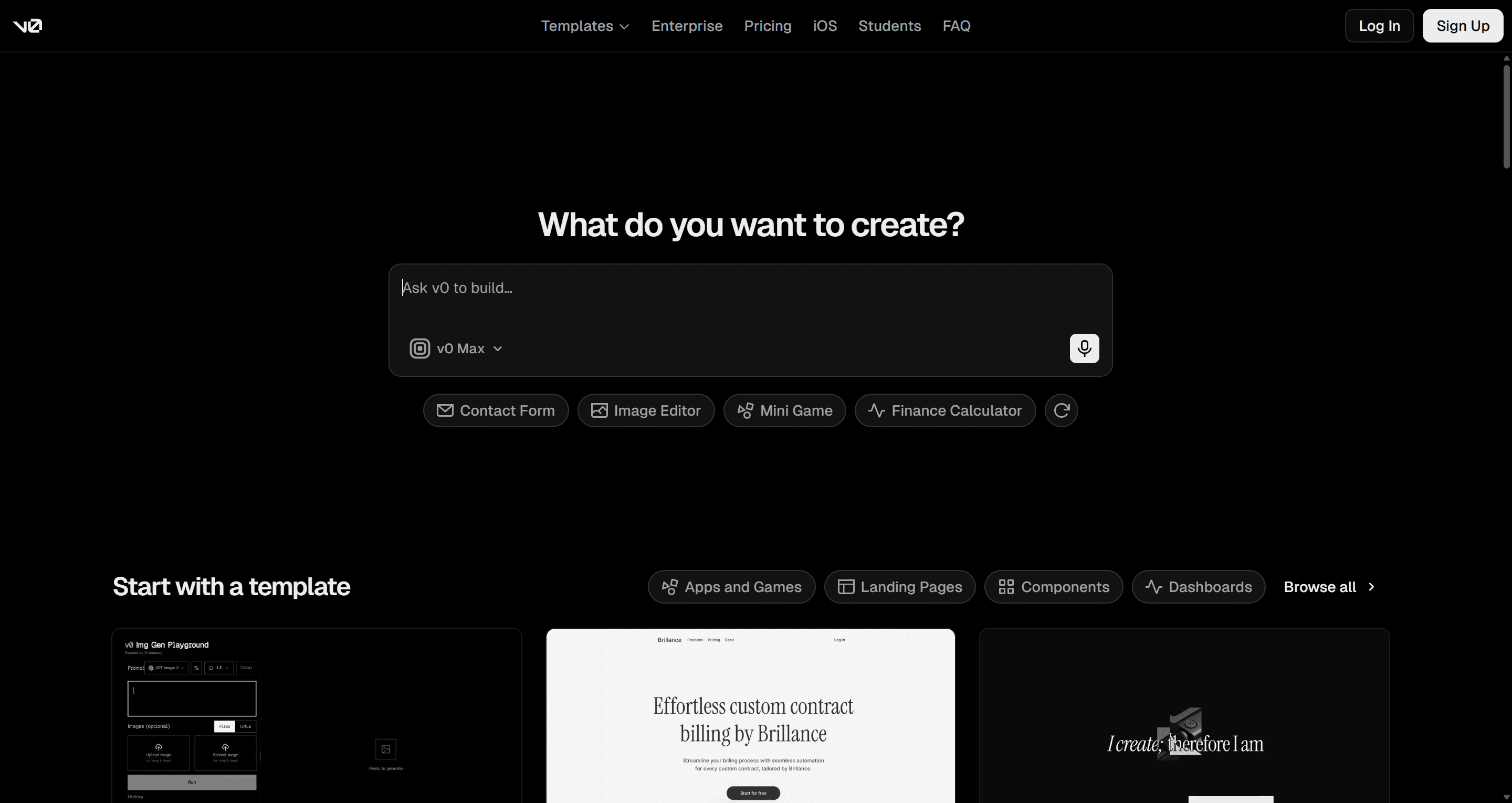
v0 by Vercel generates React components with Tailwind and shadcn/ui, and has grown into an app builder that syncs to GitHub and deploys to Vercel. If your stack is Next.js, its output needs very little translation. Our explainer on shadcn/ui covers why that matters.
v0's pricing page lists a free plan with $5 of monthly credits and a 7-message daily limit, Plus at $30 per user a month, and Business at $100 per user a month.
- Best for: React developers who want UI that drops into an existing Next.js project.
- Falls short: it is tied to the React and Vercel ecosystem, and keeping many screens consistent is up to you.
Read our v0 review and our v0 alternatives guide, or compare UXMagic vs v0.
- AI code editors: Replit's agent, on your own machine
If you can code, the strongest Replit alternative may be an AI agent that works inside the repo you already have.
Cursor vs Replit
Cursor is an AI code editor built on VS Code. It indexes your codebase, and its agent can plan and make changes across many files, run commands and fix its own errors. You keep your local setup, your Git workflow and your hosting choice.
Per Cursor's pricing page, the Hobby plan is free with limited agent requests, individual plans start at $20 a month, and Teams is $40 per user a month.
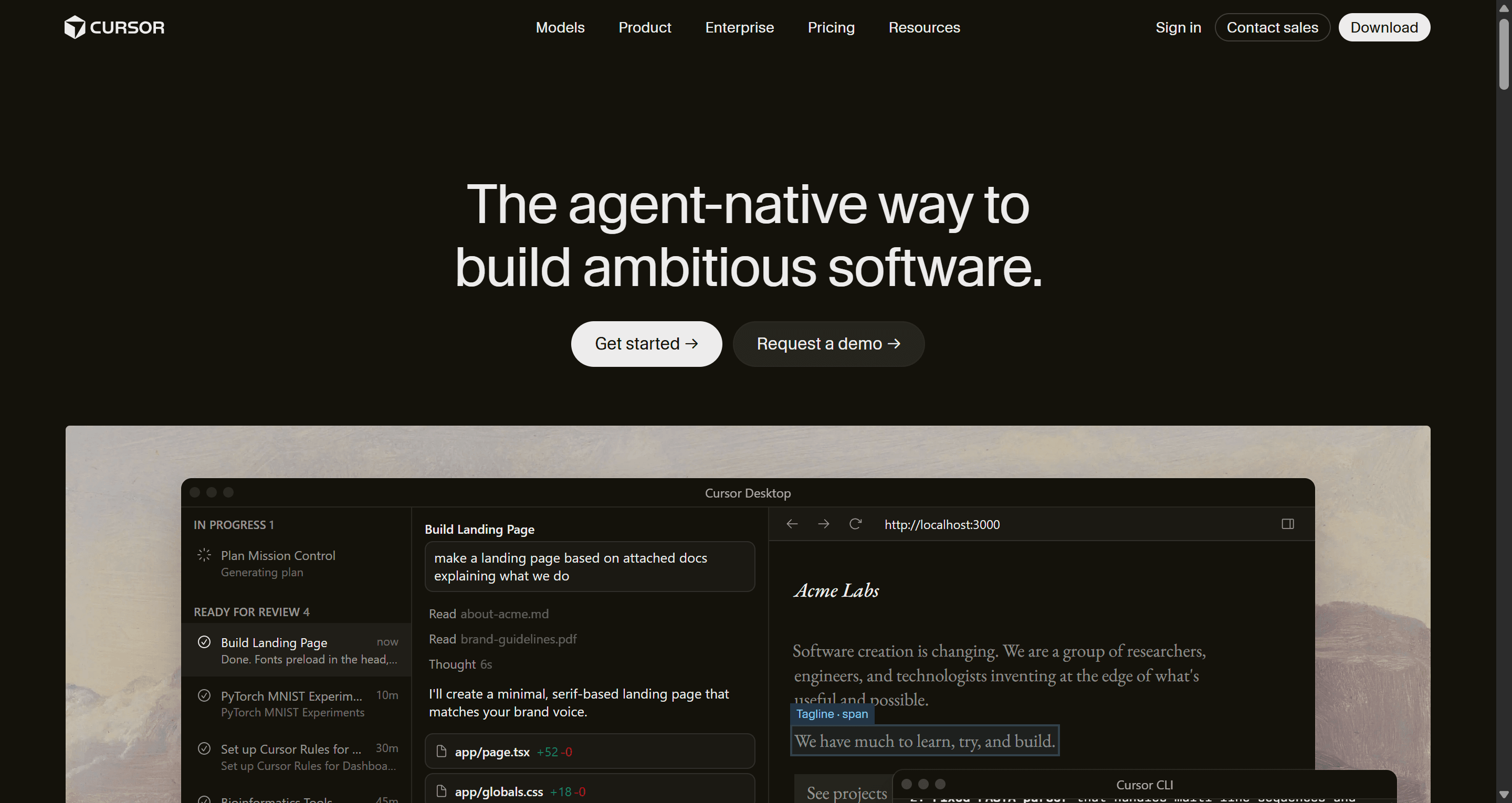
- Best for: developers with a real codebase who want an AI pair programmer rather than a new platform.
- Falls short: you need to read and review code, and you handle hosting and databases yourself.
Cursor is where the UXMagic handoff works especially well: connect the MCP server and ask the agent to build the screen you designed against your own components. Our AI coding assistants for frontend developers compares Cursor with the other options.
Windsurf (now Devin Desktop) vs Replit
Windsurf is another VS Code-based AI code editor, built around an in-editor agent. Cognition acquired it in 2025 and renamed the editor Devin Desktop in June 2026, and windsurf.com now redirects to devin.ai. Plans, extensions and settings carried over.
Third-party pricing trackers list a free plan with unlimited autocomplete and light agent use, Pro at $20 a month and Teams at $40 per user. We could not confirm those figures on Devin's own pricing page, so check it before you commit.
- Best for: developers who want a Cursor-style editor and are interested in Cognition's cloud Devin agent.
- Falls short: the rebrand is recent, so naming and plans may still shift.
Claude Code vs Replit
Claude Code is Anthropic's coding agent that runs in your terminal and IDE. It reads the repository, plans changes and edits files, and works well for refactors and multi-step tasks that need careful reasoning.
Claude Code is included in Claude Pro, which costs $20 a month or $17 a month billed annually. The free Claude plan does not include it.
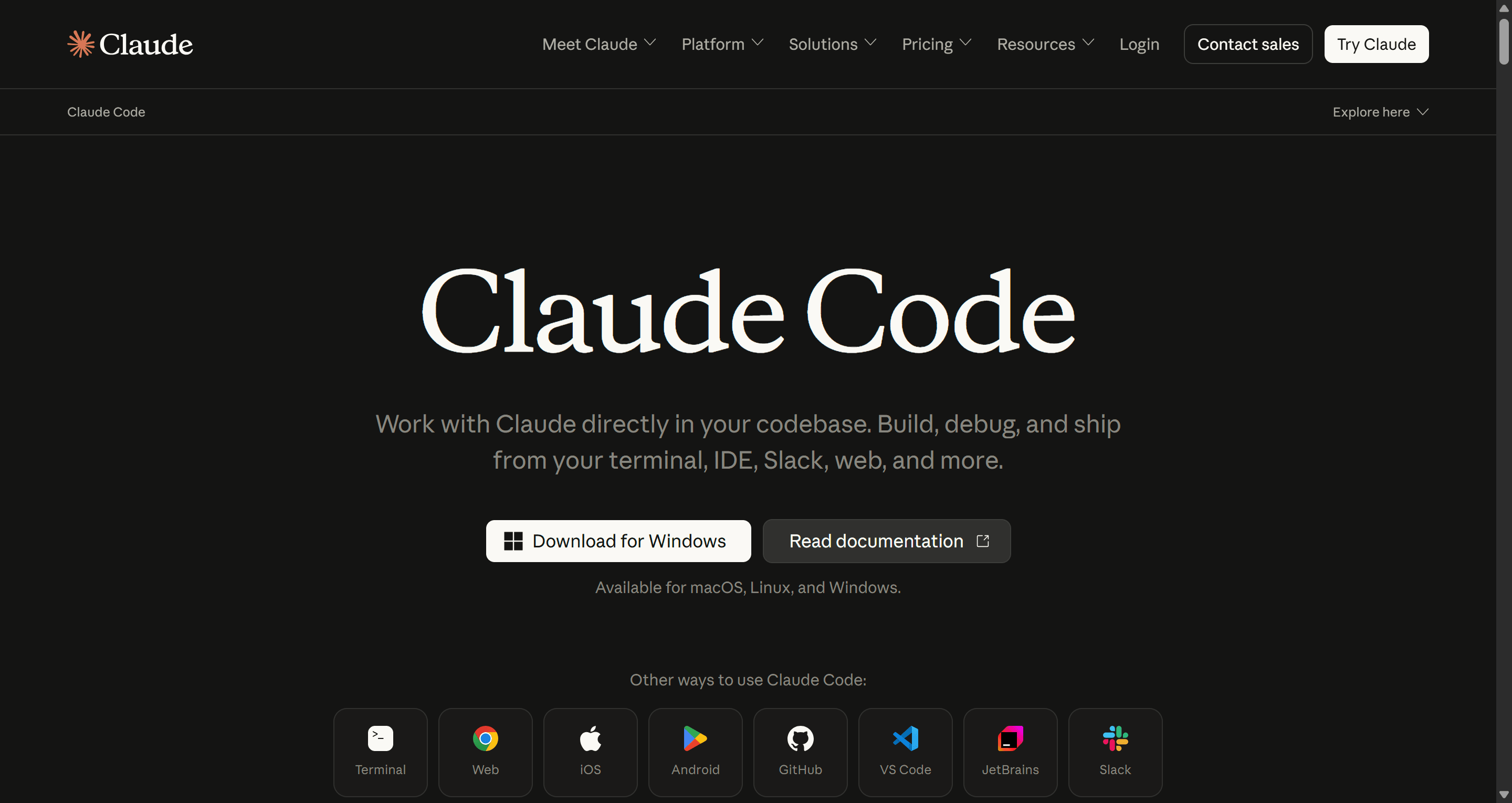
- Best for: developers who prefer a terminal agent and want to keep their existing editor.
- Falls short: there is no hosted environment or database, and usage limits apply on Pro.
Claude users can connect UXMagic without an API key through the Claude connector, so Claude can read your screens and theme directly.
- Cloud IDEs: Replit's original job, without the agent
Replit started as a browser-based IDE. If that is the part you actually use, these are the direct replacements.
GitHub Codespaces vs Replit
GitHub Codespaces spins up a VS Code environment in the cloud from any repository, using dev containers so every teammate gets the same setup. It sits next to your pull requests, Actions and issues.
Per GitHub's billing documentation, personal Free accounts get 120 core hours and 15 GB-month of storage each month, and Pro accounts get 180 core hours and 20 GB-month. Beyond that, a 2-core machine costs $0.18 an hour and storage is $0.07 per GB-month.
- Best for: teams already on GitHub who want reproducible environments.
- Falls short: no built-in app agent or hosting; it is an environment, not a builder. Core hours also drain twice as fast on a 4-core machine.
CodeSandbox vs Replit
CodeSandbox offers browser sandboxes and cloud VMs for front-end and full-stack projects. Together AI acquired it in December 2024, and some older products, including CodeSandbox Repos, have been shut down in 2026. Reports list a free plan with 400 VM credits a month. We could not load CodeSandbox's pricing page to confirm current numbers.
- Best for: quick front-end experiments and shareable reproductions.
- Falls short: the product is being reshaped under Together AI, so check what is still supported before moving a team onto it.
VS Code vs Replit
Visual Studio Code is the free, open-source editor that Cursor and Windsurf are built on. With extensions it handles almost any language, and its remote development features connect to containers, SSH hosts and Codespaces. Add an AI extension and you have a capable, free Replit alternative.
- Best for: anyone who wants full control at no cost.
- Falls short: you set up everything yourself, from runtimes to hosting.
How to choose the right Replit alternative
Start from the thing Replit is not giving you.
- "The app works, but it looks generic or the screens don't match." That is a design problem. Design the flow in UXMagic, then build. Flow-based design vs static screens explains why this saves rework.
- "I don't code and want an app with login and data." Lovable or Base44.
- "I code and want to see every file in the browser." Bolt.new.
- "I have a repo already." Cursor, Windsurf or Claude Code.
- "I just need a cloud workspace." GitHub Codespaces.
- "I want it free." VS Code, plus the free tiers above.
A workflow that spends less on agent runs
The teams we talk to rarely use one tool end to end. A pattern that keeps agent bills down:
- Write the brief. A short PRD is enough. The AI PRD generator drafts one alongside matching screens.
- Design the flow in UXMagic. Approve the screen plan, generate the screens, and adjust the theme while edits cost fractions of a credit. How to design UI with AI walks through it.
- Hand off the design. Export React code, sync to GitHub, or connect your agent through MCP. See our guide to design handoff for what a clean handoff includes.
- Build the logic in Replit, Lovable, Cursor or whichever tool suits your stack. The agent now implements a known design instead of guessing.
Our analysis of what an MVP costs to build with AI shows how much of the budget goes on iterating UI inside an app builder, and vibe coding in 2026 covers the rest of the workflow.
Give your coding agent a finished design
Generate a connected, multi-screen flow for free, then export React code or connect Cursor, VS Code or Claude through MCP.
Pricing comparison of Replit alternatives
Prices come from each vendor's official pricing page or docs as of September 2026, except where noted. Billing units differ, so compare by how much work your project needs, not headline price.
| Tool | Free plan | Entry paid plan | Billing unit |
|---|---|---|---|
| Replit | Starter: daily Agent credits, 1 app for 30 days | Core, $20/mo ($18 annually) with $20 of AI usage | Effort-based, in dollars |
| UXMagic | 20 credits a day | Pro, $35/mo or $17.50/mo annually | Credits (2,400/mo on Pro) |
| Lovable | 5 credits a day, up to 30 a month | Pro, $25/mo for 100 credits | Credits |
| Bolt.new | 300K tokens a day, 1M a month | Pro, $25/mo, 10M tokens | Tokens |
| Base44 | 25 message credits a month | Starter, $16/mo (annual) | Message and integration credits |
| Emergent | 10 credits a month | Standard, $20/mo | Credits |
| v0 | $5 of credits a month | Plus, $30/user/mo | Credits |
| Cursor | Hobby, limited agent requests | $20/mo | Requests and usage |
| Windsurf / Devin Desktop | Limited daily quota (unverified) | Pro, $20/mo (unverified) | Quotas |
| Claude Code | Not on free Claude | Claude Pro, $20/mo | Usage limits |
| GitHub Codespaces | 120 core hours a month | Pay as you go from $0.18/hr | Compute hours and storage |
| VS Code | Fully free | None | None |
Replit Pro is $100 a month ($90 annually) with $100 of AI usage, 10 parallel agents and up to 15 collaborators. UXMagic Pro covers up to 400 screens a month, unlimited projects and 250 Figma exports; the details are on our pricing page.
Our recommendation
If Replit is working, you may not need to replace it. Most people searching for Replit alternatives need to fix one specific gap: a bill that swings, an editor they don't want to leave, or an app that doesn't look like a real product.
For that last gap, the fix isn't a different builder. Lovable, Bolt and Replit all design as they code, one screen at a time. UXMagic does the design job on its own: it plans the product, keeps every screen on one theme, and hands the result to your repo or your coding agent. It won't run your backend, and we would rather you know that now. Pair it with whichever builder or editor fits your stack.
To get going faster, start from a template or the React component library, and see where UXMagic sits among the best AI design tools of 2026 and the best AI prototyping tools.
Related guides
- Best AI App Builder in 2026: 10 Tools Compared by Use Case
- 10 Best a0.dev Alternatives for Building Mobile Apps with AI (2026)
- Base44 vs Lovable (2026): Which AI App Builder Fits Your Project?
- 8 Claude Design Alternatives in 2026, Free and Open Source Included
- 10 Best Magic Patterns Alternatives in 2026, Grouped by Workflow
- Figma Agent Review 2026: What the Beta Does, Costs and Misses
- AI Design to Code Tools: The Complete 2026 Guide by Input Type
- Figma Dev Mode Alternatives in 2026: Handoff, Code and MCP Tools
- Vibe Designing: Why Vibe-Coded Apps Look the Same, and the Fix
- 9 Best MagicPath Alternatives in 2026, Grouped by How You Work
Start with the design, then build anywhere
Plan and design every screen of your app for free, then take it to Replit, Cursor, Lovable or Claude.